
Endodontics
Endodontics, also known as root canal treatment
This involves removing infected or dead pulp from the tooth chamber and root canals, and then sealing them tightly.
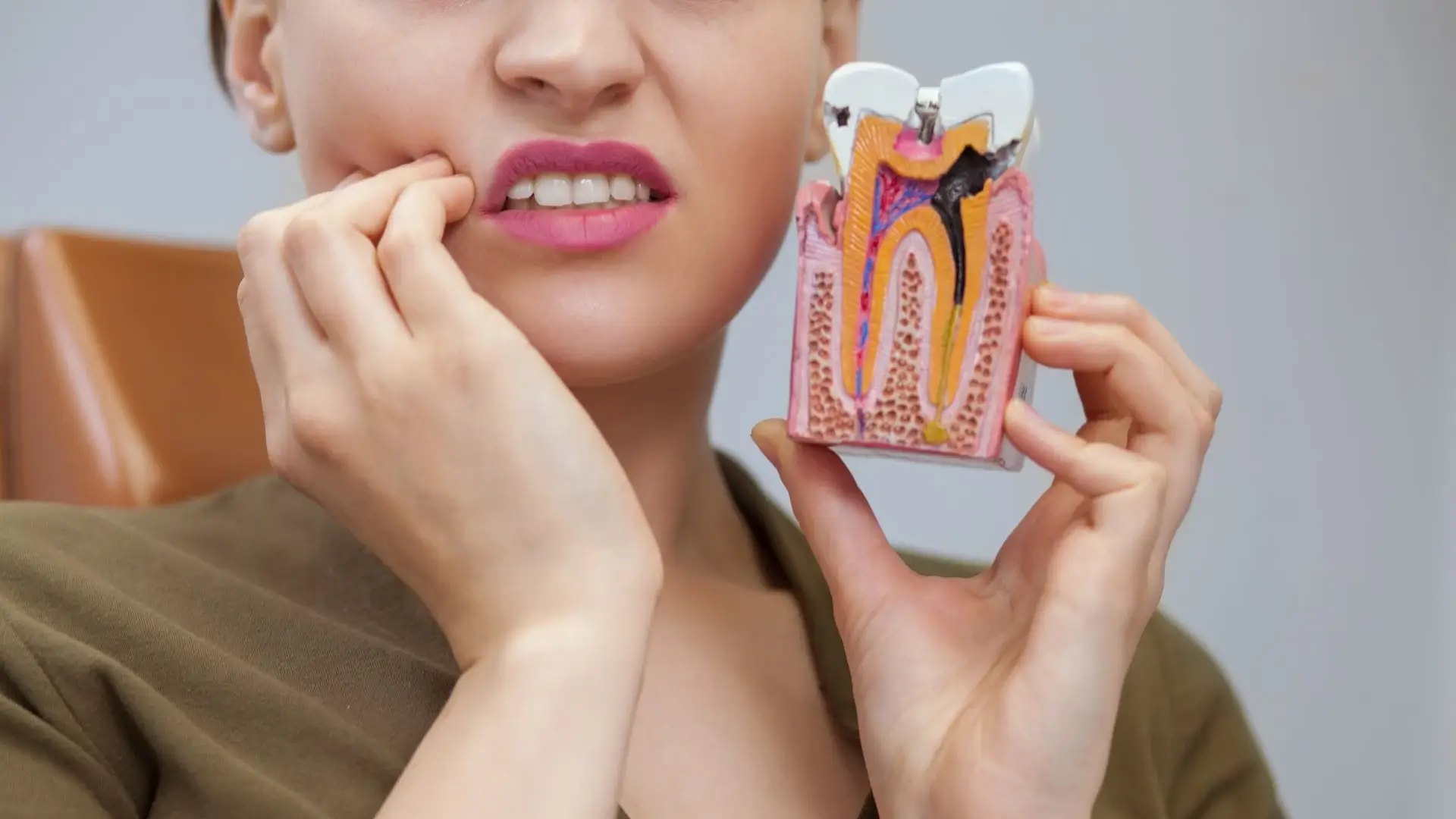
A common reason root canal treatment becomes necessary is complications from deep cavities – inflammation of the pulp within the tooth chamber and roots. Pulp inflammation occurs when decay-causing bacteria pass through the enamel and dentin into the interior of the tooth. Dental pulp is a living tissue, supplied with blood vessels and nerves, and connected to the bloodstream of the whole body. Infected pulp is dangerous not only to the tooth itself, but also to your overall health, bacteria travelling through the blood can have a negative effect on the joints, heart, kidneys, and other organs. This kind of condition requires immediate treatment.
In difficult cases we use microscope-assisted treatment, which lets the dentist see what would otherwise remain hidden. In our practice we use a Zumax OMS 2380 microscope. This makes it possible to reopen calcified canals, remove broken instruments, or locate additional canals. This generally means more thorough treatment, a lower risk of complications, and greater comfort for the patient. Teeth that would recently have been candidates for extraction can today often be treated successfully.
We also have apex locators – devices for electronically measuring canal length. We have equipment for the mechanical preparation of canals, which improves the workflow and allows better cleaning of the canal walls. We fill canals using warm gutta-percha, which fills the canal space more effectively. During irrigation of the root canals, we activate the rinsing solutions with ultrasound, which increases their antiseptic effect. Only a canal that is thoroughly filled can ensure a tight seal for the treatment. We support the monitoring of treatment progress and outcomes with our own digital X-ray equipment.
Frequently asked questions
1. How long does root canal treatment take?
The length of endodontic treatment is an individual matter and depends on the tooth’s anatomy above all the number of root canals, their shape (e.g. strong curvature), and how open they are. It also matters whether this is the first time the procedure is being carried out (primary treatment) or whether it’s a repeat root canal treatment (so-called re-endo), which requires removing the old filling material first.
Thanks to modern instruments and a surgical microscope, in most cases we aim to carry out and complete the entire treatment in a single visit. In more difficult medical cases, the dentist may decide to spread the procedure over more appointments.
2. Why do we use a microscope in root canal treatment?
The use of a surgical microscope has become standard in modern endodontics, since it allows a significant increase in the precision of the dentist’s work. This equipment offers:
- Up to 25x magnification and excellent lighting of the treatment field: root canals are often only a fraction of a millimetre wide. The microscope makes it possible to see details invisible to the naked eye, such as additional, unusually positioned canals or root fractures.
- Greater precision and tissue protection: the dentist works only within the diseased tissue, preserving as much healthy tooth structure as possible.
- Shorter treatment time: a clear view of the tooth’s anatomy often allows correct cleaning and filling of the canals in just a single visit.
- Reduced procedural risk: working under magnification allows safer identification of narrow structures and makes it easier to properly treat strongly curved canals.
3. Can root canal treatment be avoided?
Whether root canal treatment is needed depends on how far the disease process has progressed in the tooth pulp (i.e. the tooth’s internal, blood and nerve supplied tissue):
- Irreversible pulpitis or pulp necrosis: in such situations, root canal treatment is the only way to save the tooth from extraction and to prevent the infection from spreading to the bone.
- Reversible pulpitis: if the infection has not yet reached the deeper structures, and the tissue still shows the capacity to heal, the dentist may use biological (vital pulp) treatment. This involves applying special preparations (e.g. bioceramic materials) that stimulate the pulp to heal, allowing the living tooth to be preserved and root canal treatment to be avoided.
Regular dental check-ups make it possible to catch decay at a stage where biological treatment is still an option.
Why us?
Empathy
An approach that understands your concerns. We know a dental visit can be stressful, so we focus on conversation, clear explanations, and your own pace - never rushing.
Comfort
The use of appropriately chosen anaesthesia techniques and suitable equipment is aimed at reducing pain and discomfort for the patient during procedures.
Experience
Our treatments draw on the team's many years of experience, covering both more complex cases and routine visits.
Interior atmosphere
Interiors designed with attention to detail make the visit a more pleasant experience than a standard appointment.
Start your journey to a healthy, beautiful smile
Take advantage of e-registration, the option to quickly book online at any time. Every booking is confirmed.