
Pediatric Dentistry
Pediatric Dentistry
We give our youngest patients special care. We know how important a child’s first contact with the practice and the dentist is, which is why we try to provide young patients with a stress-free atmosphere. After the visit, our brave patients receive a small reward. For baby teeth we use coloured fillings – the child can choose the colour themselves. Parents are often unaware that baby teeth need treatment. Leaving them untreated can lead to bite problems and decay in the permanent teeth, which is why, alongside treating the child, we always try to advise parents on how to properly look after their child’s teeth to avoid unpleasant complications.
*For our youngest patients, regular check-ups and fluoride prevention are very important. Fluoride treatment helps prevent the development of decay.
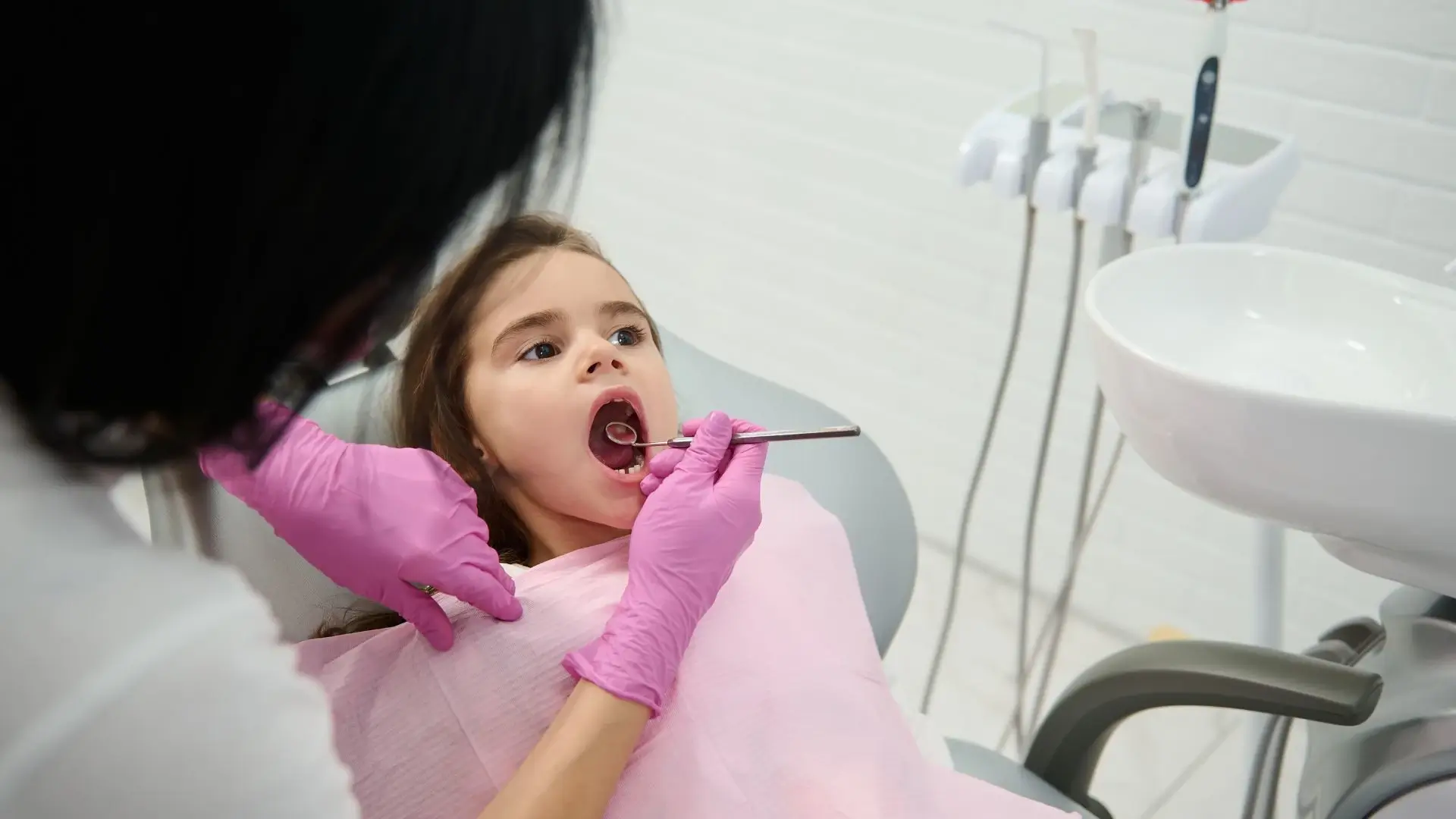
We have worked in pediatric dentistry for many years, making sure a child’s first contact with the practice is a positive experience. We run acclimatisation visits, provide hygiene education, and look after the health of both baby and permanent teeth in a stress-free atmosphere.
Frequently asked questions
1. At what age should a child have their first dental visit?
A child can come in for their first visit as soon as their first tooth has erupted, though the best time for getting used to the practice is around age 2.
Such an early visit is educationally important for parents, who learn how to properly care for a child’s oral hygiene, how to choose a toothbrush and toothpaste, and which eating habits to avoid in order to prevent decay. For the child, it’s a chance to get used to the new environment without stress. Later on, regular check-ups are recommended, allowing any signs of decay to be caught at a very early, easy-to-treat stage.
2. How can I prepare my child for a dental visit?
Parents’ own attitude plays a key role in shaping a child’s positive attitude toward medical staff. The right preparation builds a sense of safety and pays off later in life through an absence of dental anxiety (dentophobia) in adulthood.
How can parents help?
- Playing “dentist”: beforehand, try playing at home counting a stuffed toy’s teeth, or looking at teeth together in a mirror.
- Fact-based conversation: tell your child what the practice looks like, who the dentist is, and why looking after teeth matters for the health of the whole body. Use neutral, positive wording.
- Avoiding “trigger phrases”: before the visit, avoid saying things like “don’t be afraid,” “it won’t hurt at all,” or “be good and you’ll get a reward.” These phrases subconsciously suggest to the child that something unpleasant might happen.
- Books and educational stories: reading together about favourite characters visiting the dentist is a great way to get familiar with the topic.
3. Which teeth are baby teeth, and when do they fall out?
A child has 20 baby teeth in total (8 incisors, 4 canines, and 8 molars). The natural process of replacing them with permanent teeth usually begins around age 6 and continues, on average, until around age 12–13.
This process is driven by the growth of the permanent teeth developing in the bone just beneath the baby teeth. Pressure from the erupting permanent tooth causes a natural, gradual resorption of the baby tooth’s roots. As a result, the baby tooth loses its stable support, starts to loosen, and eventually falls out, making way for its permanent successor. It’s worth remembering that around age 6, the first permanent molars (the so-called “six-year molars”) erupt at the back, behind the baby teeth, without any baby tooth having to fall out first.
4. Why is treating baby teeth so important?
The common belief that baby teeth don’t need treatment, since they’ll fall out anyway, is a dangerous medical myth. Keeping baby teeth in good condition matters for several reasons:
- Rapid spread of infection: due to their specific anatomy (a thinner layer of enamel and less-mineralised dentin), decay in baby teeth develops much faster than in permanent teeth and can reach deep structures in a short time.
- Baby teeth hurt too: every baby tooth is just as richly supplied with blood vessels and nerves as a permanent tooth. Untreated decay leads to significant pain and inflammation.
- Protecting permanent teeth: inflammation around the roots of baby teeth can permanently damage the developing permanent teeth hidden within the bone.
- Proper bite and speech development: early loss of a baby tooth (e.g. because it had to be removed) can lead to bite problems, shifting of the remaining teeth, and speech difficulties in the child.
Why us?
Empathy
An approach that understands your concerns. We know a dental visit can be stressful, so we focus on conversation, clear explanations, and your own pace - never rushing.
Comfort
The use of appropriately chosen anaesthesia techniques and suitable equipment is aimed at reducing pain and discomfort for the patient during procedures.
Experience
Our treatments draw on the team's many years of experience, covering both more complex cases and routine visits.
Interior atmosphere
Interiors designed with attention to detail make the visit a more pleasant experience than a standard appointment.
Book a visit for your child
We want your child’s contact with the dentist to be as stress-free as possible. We introduce our youngest patients to the practice at their own pace, without rushing.