
Digital X-ray
Digital point and panoramic X-ray
Type of X-ray examinations carried out on site:
- Digital point (intraoral) X-rays
This is a precise examination of individual teeth (1 to 3 neighbouring teeth in a single image). It plays a key role in everyday dental practice.
- Use: diagnosing advanced decay (including on contact surfaces not visible to the naked eye), assessing the course and anatomical structure of the canals during root canal treatment, checking the seal of fillings, and assessing the condition of the bone around a tooth.
- Panoramic (pantomographic) X-rays
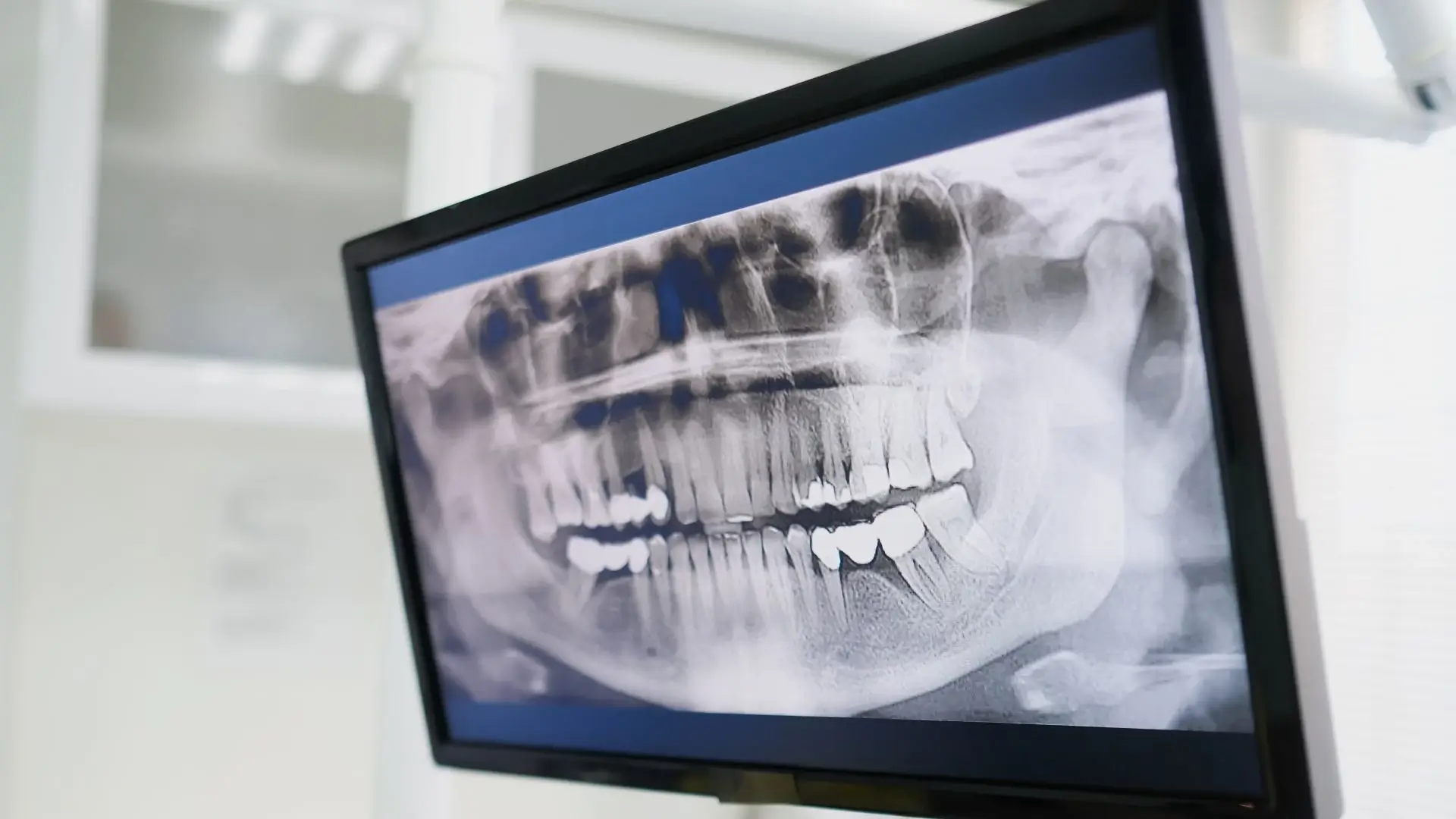
This is a general, overview radiological examination that images the patient’s entire chewing system in a single picture: all the teeth, the upper and lower jaw bones, the maxillary sinuses, and the temporomandibular joints.
- Use: essential before starting comprehensive dental treatment. It allows assessment of the condition of developing tooth buds, detection of impacted teeth (e.g. unerupted wisdom teeth), and identification of inflammatory changes in the bone.
Practical information for patients
- Safety: every radiological examination is carried out using a protective lead-rubber apron, which shields the patient from scattered radiation. The equipment is fitted with digital sensors, meaning the radiation dose is much lower compared with traditional film X-rays.
- Contraindications: pregnancy, especially in the first trimester, is a relative contraindication to X-ray examinations, the decision to take an X-ray in such a situation is made individually by the dentist, taking into account the urgency of the clinical need and the use of additional protective measures. Women who are pregnant or suspect they may be pregnant are required to inform staff before an examination is carried out.
Frequently asked questions
1. When can a dental X-ray not be taken?
A relative contraindication to routine radiological examinations for diagnostic purposes is pregnancy (with the exception of situations involving a direct threat to the patient’s life or health that require immediate surgical intervention). Ionising radiation can have a negative effect on the developing foetus, particularly in the first trimester.
For this reason, any woman of reproductive age who is pregnant, or suspects she may be, has a strict obligation to inform medical staff before the X-ray equipment is used.
2. How long does a point or panoramic dental X-ray take?
The radiological examination itself is an extremely quick procedure, completely painless and comfortable for the patient. The radiation-exposure time varies depending on the type of examination:
- Point (intraoral) X-ray: takes only about 1 second. A sensor or phosphor plate is placed directly in the patient’s mouth next to the tooth being examined.
- Panoramic X-ray (pantomogram): usually takes around 12 seconds. During this time the machine’s head makes a smooth rotation around the patient’s head.
A key condition for obtaining a sharp, diagnostically useful image is that the patient remains completely still, in the position indicated by the assistant, for the entire duration of the exposure (rotation of the machine). Even a slight head movement or swallowing can blur the image and require the examination to be repeated.
3. How often can X-rays be taken? Are there limits?
Modern dentistry does not define a fixed limit on the number of X-rays a patient may have in a year. Decisions about the frequency of radiological examinations are made by the treating dentist.
The modern digital X-ray machines used in our practice allow a reduction in radiation dose of up to 70–90% compared with older film-based technology. For example, the dose received during a digital panoramic X-ray is comparable to the background radiation dose that every person naturally receives from cosmic and environmental sources over just one or two days of normal life.
Why us?
Empathy
An approach that understands your concerns. We know a dental visit can be stressful, so we focus on conversation, clear explanations, and your own pace - never rushing.
Comfort
The use of appropriately chosen anaesthesia techniques and suitable equipment is aimed at reducing pain and discomfort for the patient during procedures.
Experience
Our treatments draw on the team's many years of experience, covering both more complex cases and routine visits.
Interior atmosphere
Interiors designed with attention to detail make the visit a more pleasant experience than a standard appointment.
Prevention and dental treatment
We encourage you to take advantage of e-registration, which allows you to quickly choose a convenient appointment time online. Every request submitted through the system is then confirmed by the practice’s reception.